Strategic Application of Irises Stained Glass Assets in Modern Design
In the contemporary landscape of digital commerce and creative entrepreneurship, visual assets are not merely decorative elements; they are fundamental components of brand communication and customer engagement. The Irises Stained Glass collection represents a specific intersection of aesthetic tradition and modern digital utility. For professionals, small business owners, and creators, understanding how to leverage these high-quality digital resources can significantly impact product differentiation and market positioning. This article explores the strategic implementation of these assets, moving beyond simple decoration to intentional design application.
The Strategic Value of High-Fidelity Digital Textures
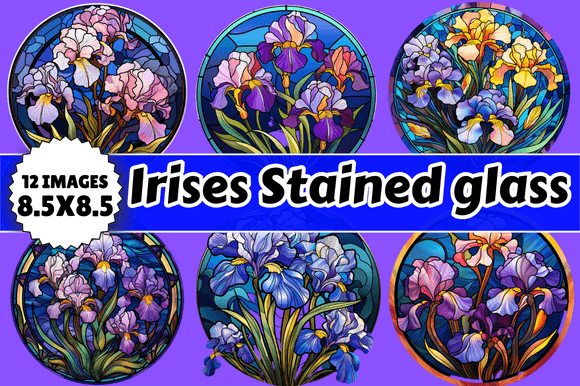
When evaluating digital assets for commercial or personal projects, quality is the primary determinant of perceived value. The Irises Stained Glass bundle offers twelve high-definition images in PNG format, sized at 8.5” x 8.5”. This specification is not arbitrary; it aligns with standard printing dimensions and digital canvas requirements, reducing the friction between acquisition and application. The use of PNG format ensures transparency support, a critical feature for layering designs over various backgrounds without the visual clutter of white boxes or rigid borders.
From a branding perspective, stained glass imagery evokes notions of craftsmanship, heritage, and intricate detail. By integrating Irises Stained Glass patterns into your workflow, you borrow these associative qualities. Whether applied to stationery, wall art, or digital interfaces, the colorful design elements communicate a sense of curated quality. For entrepreneurs, this means that the asset serves as a tool for elevating the perceived value of otherwise standard products, such as plain acrylic tumblers or generic greeting cards.
Optimizing Product Offerings Through Versatile Application
Versatility is a key metric when assessing the return on investment for digital design packs. The Irises Stained Glass collection is engineered for multi-channel use. Below are strategic considerations for deploying these assets across different product lines:
- Physical Product Enhancement: For those involved in print-on-demand or handmade crafts, the high-resolution nature of these files allows for crisp printing on diverse materials. Applying these designs to gift wrapping or scrapbook decorations transforms commodity items into premium goods. The intricate details of the stained glass pattern hold up well under scrutiny, which is essential for maintaining brand reputation.
- Digital Engagement: In the realm of digital planning and invitations, the aesthetic appeal of Irises Stained Glass can increase click-through rates and social media engagement. Users are drawn to visually complex and colorful designs. Incorporating these elements into digital planners or e-invitations can differentiate your offerings in saturated marketplaces.
- Customization and Personalization: The inclusion of transparent PNGs facilitates easy customization. Creators can overlay these stained glass elements onto photos, text, or other graphics using software compatible with Cricut or standard graphic design tools. This flexibility supports the growing consumer demand for personalized items, such as custom stickers or unique wall art.
Decision-Making Framework for Asset Integration
Acquiring digital assets is only the first step; the strategic challenge lies in their effective integration. Before implementing Irises Stained Glass into your projects, consider the following decision-making framework to ensure alignment with your broader goals:
- Audience Alignment: Does the aesthetic of stained glass resonate with your target demographic? This style often appeals to individuals who appreciate traditional art forms, nature motifs, and vibrant color palettes. If your brand identity is minimalist or industrial, these elements may require careful modulation to avoid visual dissonance.
- Contextual Relevance: Consider the medium. While Irises Stained Glass works exceptionally well for greeting cards and stationery, its application on large-scale signage may require scaling adjustments to maintain clarity. Always test prints at actual size to verify that the intricate details remain distinct and do not blur into indistinct shapes.
- Operational Efficiency: Evaluate how these assets fit into your production workflow. The pre-sized 8.5” x 8.5” format reduces preparation time, allowing for quicker turnaround on custom orders. For freelancers and small business owners, time savings directly correlate to increased profitability.
Risks of Unintentional Design Usage
While high-quality assets provide significant advantages, their misuse can lead to diminishing returns. A common pitfall is the random application of decorative elements without regard for composition or brand consistency. Using Irises Stained Glass merely because it is available, rather than because it serves a communicative purpose, can result in cluttered and confusing visuals.
Furthermore, over-reliance on trending aesthetics without developing a unique brand voice can make your offerings appear generic. To mitigate this risk, use these stained glass elements as accents rather than dominant features unless the entire campaign is themed around this specific artistic style. Balance is crucial; the intricate patterns should enhance the primary message or product, not overwhelm it.
Long-Term Branding and Customer Experience
Consistent use of high-quality visual elements contributes to long-term brand recognition. When customers associate the distinctive look of Irises Stained Glass with your brand, it creates a visual anchor that aids in recall. This is particularly relevant for businesses operating in competitive niches such as wedding invitations, boutique stationery, or artisanal home decor.
Moreover, the tactile experience of physical products featuring these designs can enhance customer satisfaction. The perception of quality in print—sharp lines, vibrant colors, and precise alignment—reflects positively on the creator’s attention to detail. This positive reinforcement encourages repeat business and word-of-mouth referrals, which are vital for sustainable growth.
Technical Considerations for Optimal Results
To maximize the potential of the Irises Stained Glass bundle, adhere to technical best practices:
- Resolution Management: Ensure that your design software is set to the correct DPI (dots per inch) for print projects, typically 300 DPI, to preserve the high-quality nature of the source files.
- Color Calibration: Stained glass designs rely heavily on color vibrancy. Calibrate your monitors and printers to ensure that the colorful design translates accurately from screen to physical product. Discrepancies in color can alter the intended emotional impact of the artwork.
- Layering Techniques: Utilize the transparency of the PNG format to create depth. Layering the stained glass elements over textured backgrounds or subtle gradients can add dimensionality to flat designs, making them more engaging for viewers.
Conclusion: Intentional Creativity as a Competitive Advantage
The Irises Stained Glass collection is more than a set of digital images; it is a resource for strategic design execution. By approaching these assets with intentionality, creators and business owners can enhance their product offerings, streamline their workflows, and strengthen their brand identities. The key lies in understanding the interplay between aesthetic appeal and functional utility. Whether used for acrylic tumbler wrapping, digital planning, or scrapbook decorations, the goal remains the same: to deliver value through thoughtful, high-quality design.
Success in the creative industries is rarely about having the most tools, but rather about using the right tools effectively. By integrating Irises Stained Glass into a cohesive design strategy, you position yourself to achieve better results, foster deeper customer connections, and build a sustainable creative practice. Thank you for your support in pursuing excellence in design and execution.